John, if you're loading all bullets to the COAL, and the longest is safe pressure-wise, then it stands to reason that shorter bullets at that same COAL will have LESS pressure. It must be true... cause I ain't blown up a gun using those old manuals.
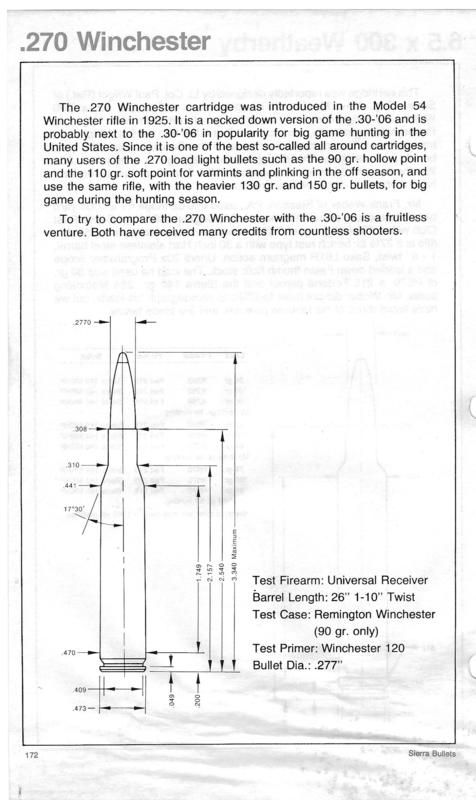
That Sierra Manual #2 was the first reloading book I bought. I learned to reload from it and with added advice from my B-I-L. The COAL does indeed change from cartridge to cartridge. I started loading for the .30-30, and in my reading, (or my B-I-L's limited instructions), came the admonishment to initially seat bullets in an empty case so the bullet touches the rifling. Then, back that down a couple of thousandths, then load a few cartridges at or nearly the bottom of the recommended range, then increase the powder charge a couple or tenths or up to a .5 grain increments and fire for groups, watching for any signs of excessive pressure. When you noticed either accuracy start to fall off or signs of excessive pressure, back off. If accuracy still wasn't up to expectations, work up another powder... changing bullet weights, repeat the above steps.
The Speer manual also has a section in front for reloading steps... And much the same step by step instructions. If using a different gun, even if the same model, the same steps need to be followed.
Somewhere in the dim recesses of the past, I've also been told, that for non-cannelured bullets to load to a length that sets the base of the cartridge at or near the base of the neck, or at a point where the bullets "belly" is still at it's widest, but never below the base of the neck... unless you KNOW that bullet and recommended charges allow for seating in the case body, as with some boattail designs.
It's like driving a car around a curve; you can go around that curve hundreds of thousands of times slower than the recommended speed, but one time too fast and you might not make it all the way thru the curve.